
The primary objective of any laboratory is to obtain reliable, precise, and reproducible quantitative results from analyzed samples. This is critical because inaccurate results can ultimately lead to significant financial losses for the business.
The guarantee of obtaining trustworthy data lies in a properly organized Internal Quality Control (IQC) system. IQC is a fundamental element of the overall laboratory quality management system, designed to experimentally confirm the reliability of analytical results within a single facility.
Internal laboratory control consists of several key components:
-
Acceptability Verification: Conducted by technicians using reference materials for every necessary parameter (e.g., moisture, protein, gluten, etc.).
-
Operational Control of Analytical Procedures: Executed according to a predefined schedule, as well as whenever there are deviations from normal workflows—such as implementing instruments after repair or calibration.
-
Result Stability Control: Managed by the quality assurance officer. This involves running control tests (following a specific algorithm) using reference materials to ensure the long-term stability of the analytical methods.
If unacceptable results are obtained, the person responsible for quality control must investigate the root causes and implement corrective actions. All procedures must be meticulously documented in operational logs and formalized in laboratory schedules.
The Role of Reference Materials
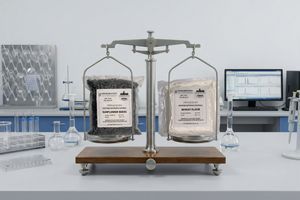
Reference materials are specialized measurement tools—often in the form of standardized grain samples—whose parameters have been rigorously established through testing across multiple accredited laboratories. They are essential consumable assets for analytical work.
They are utilized to ensure measurement uniformity, specifically for:
-
Verifying, calibrating, and adjusting measurement instruments, as well as checking their metrological characteristics after maintenance.
-
Monitoring the error margins of measurement techniques during routine use, and facilitating other forms of metrological oversight.
Internal Quality Control Procedures
1. General Provisions
-
Purpose: This procedure establishes the rules for conducting internal accuracy control within a testing laboratory.
-
Function: It serves as a primary method for evaluating the performance quality of individual analysts and the laboratory as a whole.
-
Object of Control: The focus is on the measurement results obtained during routine testing.
-
Responsibility: The laboratory manager is responsible for the preparation and timely organization of all IQC activities.
-
Tools: Reference materials—samples with a known concentration of the target component—are the primary instruments for laboratory control.
2. Execution of Result Verification Internal control of measurement results is carried out through:
-
Checking the correctness of calculations, data logging, rounding rules, and error estimations.
-
Conducting multiple replicate tests on the same sample to assess consistency.
3. Schedule and Operational Guidelines
-
Continuity: Accuracy control must be an ongoing process. It is executed by both the laboratory manager and the individual technicians performing the tests, with all activities recorded in the IQC logbook.
-
Continuous Tasks: These include monitoring sample storage conditions, verifying the readings of rapid (NIR) analyzers, maintaining laboratory documentation, drafting reports, and calculating deviations between parallel tests.
-
Monthly Tasks: These involve verifying calibration curves, self-checking test accuracy by introducing internal standards, having different analysts test the same parameter on a single sample, and ensuring strict adherence to environmental and procedural conditions.
-
Review and Improvement: The outcomes of IQC activities must be discussed during staff meetings to address any identified procedural violations or technical issues.
-
Repeatability Standards: Internal repeatability control for a single sample must be based on at least two parallel analytical results obtained under identical conditions. This is a preventive measure conducted during every test. Furthermore, operational control should occasionally involve two different analysts testing the same sample.
-
Documentation: All verification results must be formally registered in the Internal Quality Control Log.
-
Ultimate Responsibility: The laboratory manager holds final responsibility for the organization and effective execution of the IQC system.