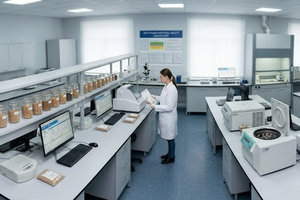
When a company operates multiple geographically dispersed laboratories, a critical question inevitably arises: "How do we ensure measurement consistency across all locations?" In other words, how can we guarantee that the analytical results (e.g., for moisture, protein, gluten, fat, or oil) from each branch do not differ beyond the permissible margin of error?
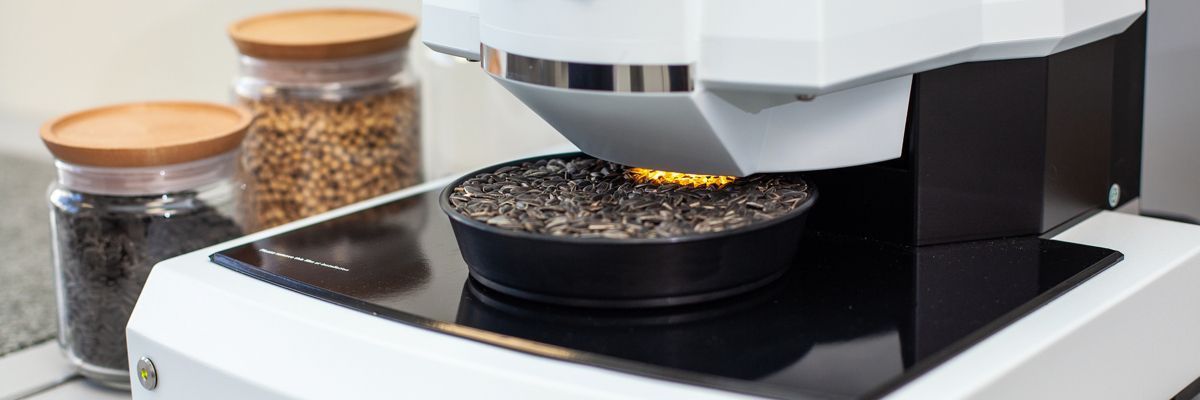
To address this, let's look at the rapidly advancing field of grain quality testing using Near-Infrared (NIR) analyzers. These devices allow technicians to test multiple parameters simultaneously in just a few minutes, using a small sample size and eliminating the need for complex glassware or chemical reagents.
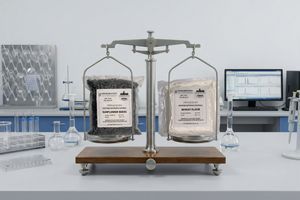
However, there is a crucial caveat. In simple terms, NIR analyzers generate results by comparing the spectrum of the tested sample against pre-loaded calibration models. To maintain accuracy and measurement consistency, the analyzer must be routinely verified (validated) using standardized reference materials.
What is Measurement Consistency and Why Do We Need Reference Samples?
According to fundamental metrological principles, measurement consistency is a state in which the results of measurements feature deviations or metrological uncertainties that remain strictly within established limits.
Even a brand-new analyzer with factory-set calibrations must be validated on-site upon installation, specifically using the crop profiles requested by the client.
For instance, the international standard ISO 12099 (Animal feeding stuffs, cereals, and milled cereal products — Guidelines for the application of near-infrared spectrometry) states that proper validation requires an adequate number of representative samples covering:
-
Combinations and parameter ranges spanning from minimum to maximum expected values.
-
Seasonal, geographical, and genetic variations in feeds, raw materials, and grains.
-
Differences in harvesting and sample preparation techniques.
-
Various storage conditions.
Furthermore, equipment naturally degrades over time. Mechanical parts wear out, electronic components (like infrared lamps) age, and measurement readings can begin to "drift." Therefore, an NIR analyzer must always be validated using reference samples after any maintenance or repair work.
If a corporate network includes several laboratories separated by hundreds of miles, even if they use the exact same brand and model of analyzers, a lack of regular calibration will lead to conflicting results. Utilizing standard samples with a certified metrological uncertainty during maintenance intervals ensures that all instruments across the network will deliver matching results within the acceptable tolerance.
3 Mandatory Requirements for Measurement Consistency:
-
Technical Integrity: The grain analyzer must be in optimal working condition. This requires regular maintenance, strict adherence to operating guidelines, and timely repairs when necessary.
-
Periodic Validation: At least once per calibration interval, the analyzer must undergo periodic technical servicing, which includes the validation of its calibrations using Certified Reference Materials (CRMs).
-
Routine Internal Checks: Once commissioned, a designated laboratory technician should perform routine calibration checks using a set of reference samples. The laboratory manager determines the frequency of these checks based on testing volume and operational conditions.
A Practical Example
Imagine two laboratories within the same agricultural holding testing protein content using the identical Kjeldahl method. However, their results differ by an amount that exceeds the method's reproducibility limit.
Which laboratory can guarantee its level of metrological uncertainty? The answer is the laboratory accredited to the ISO/IEC 17025 standard. This accreditation ensures that the laboratory’s equipment is properly calibrated, the staff is certified, a comprehensive quality management system is in place, and reference samples are systematically utilized.
If neither laboratory is accredited, a legitimate dispute occurs. Each side will argue, "Why should we trust your data? We believe our laboratory provides the accurate result." This scenario is akin to a plaintiff and a defendant trying to reach a settlement without a mediator. There must always be an objective arbitrator to resolve the conflict. In a courtroom, that arbitrator is the judge. In grain analysis, the ultimate arbitrator is the use of Certified Reference Materials (CRMs).