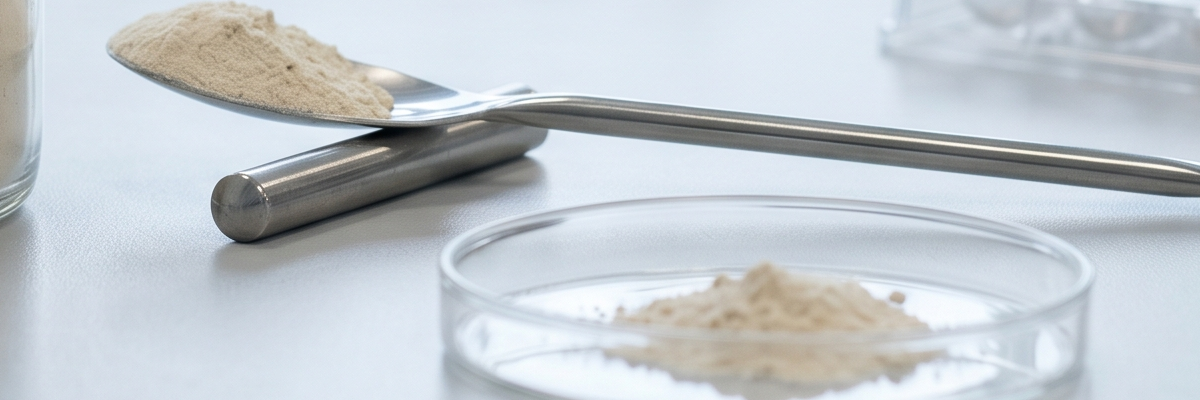
Certified Reference Materials (CRMs) are an essential tool for analyzing grain samples in a laboratory setting. They serve as a recognized and reliable benchmark for measurements, ensuring the accuracy and rigorous quality control of analytical procedures. The purpose of this article is to provide an overview of CRMs, their production, and the significant benefits of their application in grain testing laboratories.
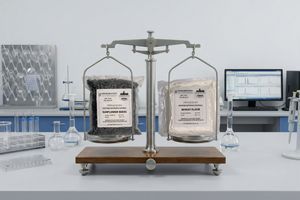
CRMs are standardized materials with clearly defined compositions and properties, produced by officially certified manufacturers. They are primarily used as calibration standards and quality control checkpoints in laboratory testing. These materials can be organic or inorganic and are developed for a wide range of applications, including food analysis, environmental monitoring, and clinical diagnostics. They are produced using the most highly precise and accurate measurement techniques available, complying strictly with international metrological standards.
Application of CRMs in Grain Laboratories
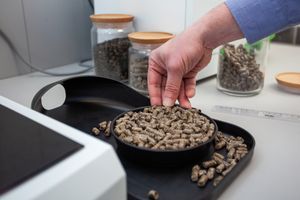
CRMs can be utilized across various critical applications within agricultural laboratories. One of their primary uses is determining the nutritional value of grain, including verifying the content of vitamins, minerals, and key physicochemical parameters. They are also indispensable for detecting harmful contaminants, such as mycotoxins and heavy metals.
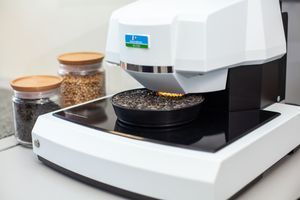
Furthermore, laboratories rely on CRMs to ensure the precise measurement of grain moisture content, a parameter that is absolutely critical for safe grain storage and processing. Finally, technicians operating advanced instruments—such as Near-Infrared (NIR) analyzers or Dumas/Kjeldahl apparatuses—use CRMs to determine the actual accuracy of protein and oil content readings in seeds and grains. This step is vital for robust quality control and fair market valuation.
The Importance of Accreditation and Traceability
Using accredited and fully traceable CRMs is the cornerstone of laboratory quality control and standardization. Accredited CRM manufacturers undergo stringent auditing and quality assurance procedures to guarantee the exactness and reliability of their products. Metrological traceability is equally crucial, as it allows a laboratory to establish an unbroken chain connecting its own local measurements to globally recognized standards.
According to international guidelines, highly reliable CRMs must be produced by a manufacturer holding an ISO 17034 accreditation. The official certificates accompanying CRM samples from such accredited providers always include the expanded measurement uncertainty for each certified property value.
Challenges and Limitations of Using CRMs
There are some recognized challenges associated with implementing CRMs in routine grain laboratory operations. Firstly, a perfectly matched CRM might not be commercially available for every niche grain type or highly specific analytical method. Secondly, the procurement cost of high-tier CRMs can be perceived as steep for smaller testing facilities. Lastly, compatibility issues can arise if there is a discrepancy between the reference method used to certify the CRM and the routine method utilized by the laboratory, which could lead to comparative errors if not properly addressed.
Conclusion
In conclusion, incorporating CRMs into the workflow of grain laboratories delivers substantial benefits, including unparalleled precision, robust quality control, and procedural standardization. While there are some logistical and financial limitations, the overarching benefits easily outweigh the costs. The alternative—reporting incorrect laboratory results—can lead to severe commercial disputes, legal action, and a devastating loss of reputation among clients. Therefore, utilizing CRMs is a fundamental necessity for any laboratory committed to providing accurate, reliable, and legally defensible grain sample analyses.
References:
-
International Organization for Standardization (ISO). (2016). ISO Guide 35: Reference materials – Guidance for characterization and assessment of homogeneity and stability. Geneva, Switzerland.
-
National Institute of Standards and Technology (NIST). (2014). Certified Reference Materials: An Overview.
-
U.S. Department of Agriculture (USDA), Grain Inspection, Packers and Stockyards Administration. (2010). Moisture and protein calibration using certified reference materials.